Review of Bruce Cockburn, The Blood of Others (Sunset Blvd Records, 2026)
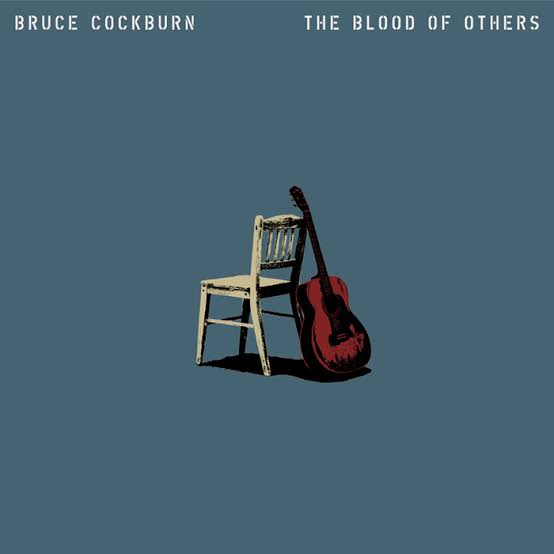
Bruce Cockburn’s The Blood of Others is a generous fifteen song album that bears witness to the musical landscape that was formative for Cockburn’s musical imagination. Covering songs composed from the early 1900’s to 1961, the album explores the fertile musical ground of blues, folk, gospel, ragtime and jazz that birthed Cockburn’s remarkable musical contribution.
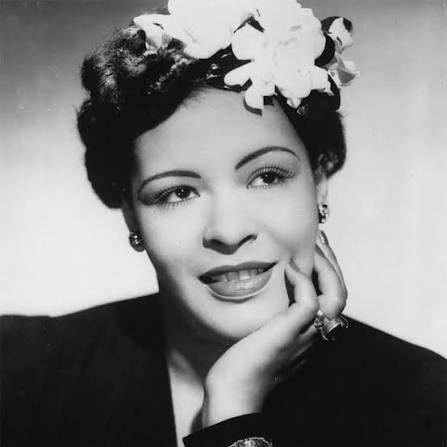
That this seasoned artist interpreted these songs with sensitive phrasing and exquisite guitar work was no surprise. But I wondered whether I would find much personal resonance with Cockburn’s rendering of Billie Holiday’s “God bless the child,” Bing Crosby’s “I’ll be seeing you,” Fred Astaire’s “One for my baby,” Jo Stafford’s “You belong to me,” or the iconic “As time goes by,” immortalized in the film, Casablanca.
Well, not only was I entranced by the sheer musical beauty of this album, I also found it to be profoundly wise.
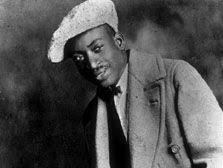
While the album explores a diversity of genres it is noteworthy that Cockburn opens and closes with gospel. It is almost as if Cockburn is saying that gospel is the alpha and omega of his imagination, the foundation and the goal. Indeed, both Robert Wilkins’ “Wish I was in Heaven Sitting Down” and Thomas A. Dorsey’s “Peace in the Valley” have a decidedly eschatological focus. From the longing to sit down and rest after an arduous journey to the impossible hope of a deep peace that heals our sorrowful and violent world, Cockburn takes up the mantle anew as a singer of songs of hope in the midst of a deeply broken world.
This is a beautifully reflective album, even melancholic at times. One theme that recurs is that of permanence and change. Singing Ian Tyson’s “Four Strong Winds,” Cockburn reminds us that even as the “four strong winds that blow lonely/seven seas that run high” might be counted amongst “all those things that don’t change/come what may,” the song nonetheless must confess, “but our good times are all gone/and I’m bound for moving on.” Some things are constant, but other things, especially human love, are sadly transient. And though Cockburn will recollect in “As time goes by” that “It’s still the same old story/a fight for love and glory/a case of ‘do’ or ‘die’/the world will always welcome lovers, as time goes by,” the fragility of such love echoes through the whole album.
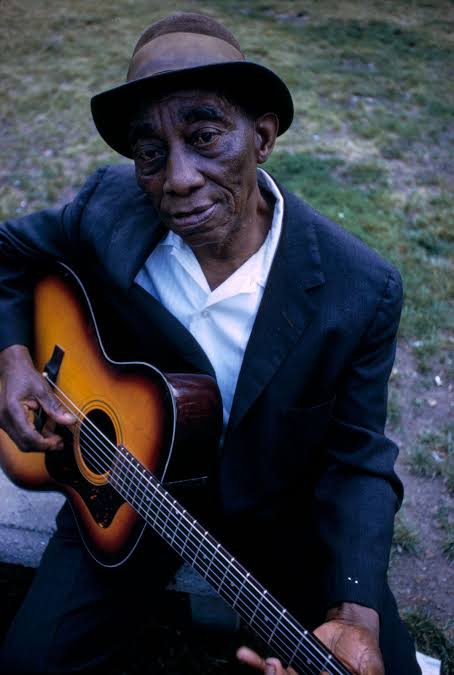
Indeed, a dangerous fragility is never far from the surface on this album. From the misogynistic violence implied in “Buddy Bolden’s Blues,” to the disappointment and injustice of “God Bless the Child,” to the murder narrative of Mississippi John Hurt’s “Louis Collins,” to Lonnie Johnson’s “Laplegged Drunk Again,” “trying to drink these weary blues way,” there is sorrow, threat, loss, and disappointment running through these songs.
Maybe that is one of the reasons why Cockburn chose the title of a Simone de Beauvoir novel to name this album. Set in the context of the Nazi occupation of France, de Beauvoir’s The Blood of Others evokes questions of responsibility and betrayal, resistance and collaboration in the face of a fascist regime. Not that different from our own precarious historical moment. And not that different from the cultural context in which Cockburn’s body of work can be found.
This is a retrospective album, inviting us into a space of memory. But there is nothing sweetly nostalgic about this collection of songs. The artist invites us to remember not just how songs shape our imagination, but also how they can hold together the truth of hope and loss, of love and broken-heartedness. And so it is significant (and brilliant) that Cockburn places “Autumn Leaves” as the penultimate song on the album. But rather than the watered down English translation of the song that has become a jazz standard ever since Doris Day, Cockburn sings the original French song, “Les Feuilles Mortes.” Here we are called to remember, to not forget, “The dead leaves pile up in the shovel/memories, regrets as well/and the north wind carries them away/into the cold night of forgetting.”
There are memories of love and regret. You won’t have one without the other. To lose those memories, even in their ambivalence, is to enter into a cold night of forgetting. And that will render us defenceless to the forces that would shed the blood of others in our own dangerous time.
Throughout his career, Cockburn has immersed us in the deepest struggles of our time while always evoking a world of wonders with the sheer beauty of his musicality. This album is no exception.