by Matt Bonzo, Small Wonders Farm
[We acknowledge that a shorter version of this piece was published at the “Free to be Faithful” Substack of the Institute for Christian Studies.]
Grief caused me to linger over my morning coffee
In the chair beside my wife
Where I would not be were it not for his words
But there is chaos in the pig pen
And the cows need fed
As Wendell taught us
Life goes on
Even after you are dead
On Hurt and Home, Remembering and Forgetting

The line “we hurt and are hurt and have each other for healing” from Wendell Berry’s poem “Marriage” crosses my mind often. It is a moment of grace. I have little doubt that the appearance of the poem in my thoughts is prompted by my shortcomings as a spouse, a parent, a friend. However, those lines do not trap me in guilt. They are a confession rooted in faith, hope, and love that reflects my longing for deeper connection in my relationships. The next line of the poem cautions:
“It is healing. It is never whole.”
It is a confession spoken by trembling lips as the words of longing are spoken into the fallen world. Such is the wisdom of a man who knows enough about the world and enough about himself to tell the truth.
Living in our time has led many of us to feel as if we are walking up thickly wooded hills and down into deep valleys whose ridges block the horizon where we hoped to find a way out of the turmoil of our age. Berry’s words remind us that though the journey is longer than expected, there is still a path to being whole, to being at home. The deep remembering of his fictional world breathes life into the dying embers of our longing for belonging and recognition, even as we navigate a world hell-bent on making us forget. In the weariness brought on by losing trust of one another and our institutions, the thoughts of the Mad Farmer remind us of raspberries and taking the hand of a loved one. And before you can conclude that Berry is just some sentimental author who creates places to escape to, his essays offer stringent critiques of our diseased practices.
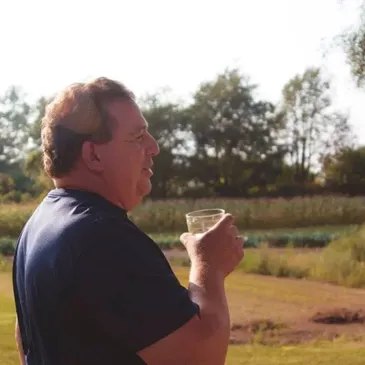
Just when I am ready to join the world of forgetting what is good and real, just when I am ready to settle for a cheap life, I read a little Berry and I walk a little further, looking for a path and hoping I am getting closer to a place where I have never fully been.
Gift, Memory, and Affection
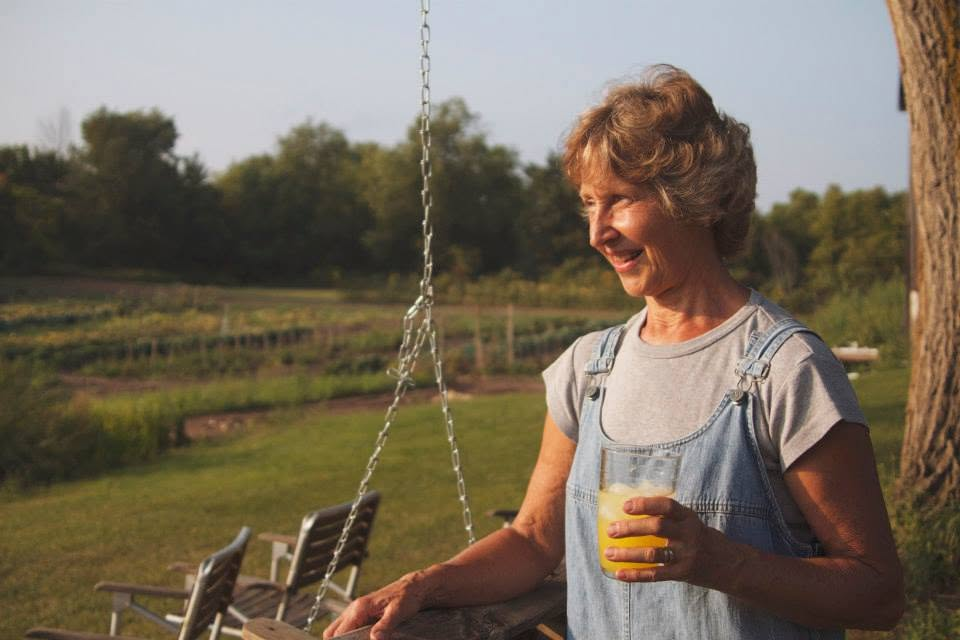
Berry’s writing does not describe some ideal community “where the children are all above average” as Garrison Keillor used to say. Berry loves his place too much to lose it in nostalgic tales or illusions of grandeur. Nor is there an advice column hidden in his writing telling people to move in to pursue the so-called simple life found in some small town. The simple life is elsewhere. Cute farms show up on YouTube, not in Port William or Port Royal. What Berry’s writing offers is a vision of living with enough faith and hope to see the many gifts that surround us even when the brokenness of the world makes them hard to receive.
Many of these gifts were given before we entered our troubled times, by those whom we now can only remember. It was their presence that allowed us to be. Just remember. Even the groanings of creation tell us of the goodness that was and is to come. Just remember. Love is present in a myriad of ways and so “it all turns on affection.” Berry does not need to craft some myth of progress, no master plan that promises wholeness but delivers fragments. Rather he prompts us to ask an ancient question: Do we have the eyes to see and the ears to hear the love that has been, is, and ever shall be? And will gratitude lead us to speak that love, to give it away to some other lonely traveler with heavy burdens as she tries to find her way home?
Dismember, Disremember, and Idolatry
It is no wonder that the wisdom offered by Berry is wisdom most readily heard by those who have been uprooted and wounded by the powers of this world. These are the powers who profit from our wandering desires: “Love… the annual raise, vacation with pay. Want more of everything ready-made.” These are the same powers that sacrifice people and places in the name of wealth, security, and relevance. This eagerness to dismember and disremember our communities in the name of some idol of our time demands our resistance. It is the love of the people and places that require us to do, as Mary Berry stated in her reflection on her father’s life, “the right thing that is before us,” For Berry, confronting the destructive powers is never a justification for violence. Only a steadfast speaking and living of the truth can form a community that resists, that can imagine the world to be otherwise and can begin to heal.
Upon his death, Wendell Berry has gained a new level of popularity, at least for a time. His book sales will undoubtably see a bump. He is, after all, a good writer. But it is difficult for me to imagine that a surge in popularity will lead to his contrarian voice being heard clearly in the centers of power. In proclaiming “practice resurrection” the Mad Farmer is insisting that the algorithms and marketing campaigns used by the “generals and politicos” to secure their kingdoms are impotent. To practice resurrection is to live in such a way as to expose the limits of every other claim to power. Practicing resurrection, remembering, and loving can only be perceived as threats to those who lust for domination.
Hearing Berry on the professional and agricultural margins
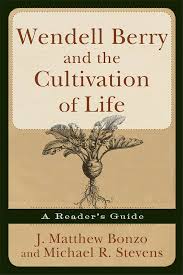 In the spirit of confession, I will admit Berry’s words reach me at a different place than when I first read him thirty-five years ago. As you may know, my friend and colleague, Michael Stevens, and I wrote a book on Berry several years ago. And I still think we presented a good understanding of Berry’s work. That work influenced our professional life together. A student could not graduate from our humanities department without having read Berry in multiple classes. I don’t think it is overstating the case to say his work brought life to our entire academic department.
We could have never imagined back then that our own university would turn against us in the name of the idols of the “market” and “theo-political purity.” We, my whole department, were dismembered and disremembered by the president and board of that university. We dared to speak and live in truth and so we were removed, not only from the payroll but from their archives. It’s as if we never existed.
So now I hear Berry differently. My (work) community has been fragmented and though the deep love we had for each other remains, the relationships are hard to maintain. I am sure this is a familiar experience as churches, friendships and families have splintered along similar fault lines. We live in a world where it is just harder to be with one another.
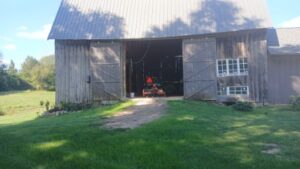
I hear Berry from the margins where we live, which is on a small farm without the financial security my previous position afforded us. Even though I know most of the world lives in more marginal places and with greater risks I must admit that now when I ask myself do I have the eyes to see and the ears to hear, my lips tremble a bit more as I confess my longings. And after praying thy kingdom come, I get up and I do the work at hand. In this place, with these people, I find healing, but sometimes it feels just a little further from being whole.
“It is not the easiest way; it is one way.” A way I would have a much harder time recognizing if it were not for the wisdom of Wendell Berry.

3 Responses to “The Work at Hand: Remembering Wendell Berry”
John Deacon
The opening lines of your confession ‘were it not for his words’ reminds me of his Berry’s poem
‘A Brass Bowl’
Worn to brightness, this
bowl opens outward
to the world, like
the marriage of a pair
we sometimes know.
Filled full, it holds
not greedily. Empty,
it fills with light
that is Heaven’s and
its own. It holds
forever for a while.
John Deacon
The opening lines of Matt Bonzo’s confession on the impact of Wendell Berry on his life – ‘were it not for his words’ – reminded me of a Wendell Berry poem entitled ‘A Brass Bowl’.
In discovering it, it inspired me to buy the same for my wife, filled with a plant I was assured would never die.
Thankfully nearly 6 years later it still lives. It is my take on practicing resurrection, albeit indoors.
On the base of the bowl I taped the text of his poem in red letters:
Worn to brightness, this
bowl opens outward
to the world, like
the marriage of a pair
we sometimes know.
Filled full, it holds
not greedily. Empty,
it fills with light
that is Heaven’s and
its own. It holds
forever for a while.
Brian Walsh
I wonder how many marriages Wendell’s writing enriched. When I do a wedding, I always refer to the giving of one to another in faithful commitment, “the most momentous of all giving,” which is, of course, from Sex, Freedom and Community.